Interior Lead Paint Removal in Redwood City

Typical cost in Redwood City

  • Small area, about 100 sq ft (stair rail, trim in one room)$950 – $2,350+
  • One room$1,850 – $5,500+
  • Whole interior, typical house$8,300 – $20,500+
  • Whole interior, large or two-story house$19,500 – $57,500+

Redwood City Lead Paint Removal plans interior lead paint removal in Redwood City for painted woodwork, stair parts, doors and plaster in houses and apartments built before 1978. The work follows Title 17: certified abatement workers, containment, written notice and a clearance check when the work is meant to last 20 years or more.

With about half of Redwood City households renting, some jobs here take place in occupied flats. We plan interior lead work in Redwood City and the neighboring Peninsula cities of San Carlos and Menlo Park.

Request a free quote
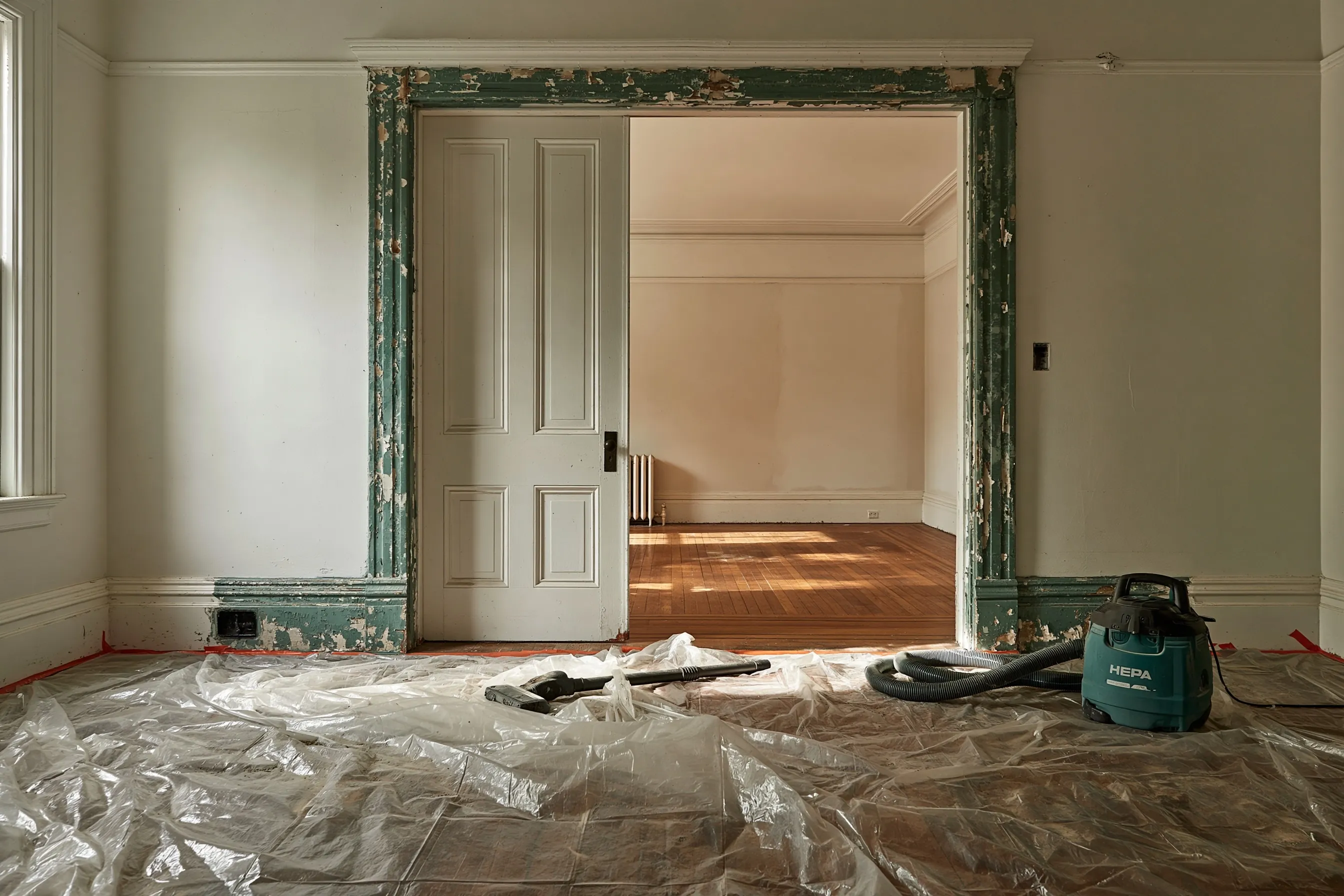
Interior door frame and baseboard with layered old paint, room prepared with plastic sheeting

Interior surfaces

Doors, casings and baseboards

Woodwork that has been painted many times can test positive for lead. A casing or baseboard can be stripped under containment or taken out and replaced. Replacement removes the paint with the wood, though matching an old profile costs more than a stock board.

Stair parts and railings

Treads, risers, newel posts and handrails are rubbed and struck every day, which breaks the paint down fastest. They are good candidates for stripping or replacement, and the stair is cleaned and checked before anyone walks it again.

Plaster walls and ceilings

Painted plaster can be stripped, covered with new drywall or panels, or coated with an encapsulant if the paint is sound. Covering or sealing leaves lead in place, which is why California separates work meant to last 20 years or more, which is abatement, from shorter-term interim controls.

Occupied homes and units

Containment means plastic sheeting, sealed doors and vents, and work areas closed to residents. Tenants and neighbors in adjoining dwellings get written notice before abatement, and rooms are cleaned before residents return. Phasing rooms or timing the job for a turnover can keep disruption down.

Removal, enclosure or sealing

Permanent abatement removes lead paint or covers it in a way designed to last at least 20 years, and it needs a CDPH-certified Supervisor or Worker, a written plan and clearance. A shorter-term interim control, such as sealing sound paint, does not need CDPH certification, but containment and the Title 17 cleanliness standard still apply. When lead paint is only disturbed by a remodel, the EPA renovation rules are in play instead.

A sealing coat belongs on paint that is sound, on a wall that is neither rubbed nor damp, after loose paint has been dealt with. Encapsulants are formulated to bond; standard wall paint is not.

What affects the cost

The number of rooms and components, how much of the paint is failing, whether stripping or covering is chosen, whether the home is occupied and the notice, plan and clearance steps of permanent abatement all shape the scope.

Interior jobs begin with a test (see lead paint inspection and testing) unless the paint is only being disturbed by a remodel, which lead-safe renovation and remodeling covers. Other services are on the homepage of Redwood City Lead Paint Removal.

Request a free lead paint removal quote

Rooms and surfaces involved, whether the home or unit is occupied, the address and the build year: those four facts start the conversation. Mention any lead report too. We'll get back to you soon with an estimate or any questions we have. Estimates are free and there's no obligation.

Call (650) 649-4986

Call (650) 649-4986